
Fitness for Women at Every Age
Discover the benefits of exercise and the best workouts for your body, whatever decade of life you’re in.

If you want to live longer, the science is clear: exercise. It’s not just about quantity, either. The best exercises are ones that give you quality of life, and gentle stretching on a yoga mat could be enough. There are many benefits of exercise, including the important role it plays in maintaining a healthy immune system. As well as helping the body deal with pathogens such as viruses, it slows down changes to the immune system as we age, reducing the risk of infections.
Fitness covers a range of different physiological phenomena. In textbook terms, there are five components of physical fitness.
When you’re young, you tend to focus on one or two of these pillars, and you can get away with it. As you age, the full spectrum of fitness becomes increasingly important. Cardiovascular fitness helps protect you from heart disease, and muscular strength and endurance keep your bones strong. Both help maintain lean muscle mass, which in turn reduces your risk of other chronic diseases. Meanwhile, good mobility keeps you mobile. In short, all of them play a role in keeping you well.
It doesn’t matter how or why you keep fit. Arguably, the best workouts for women are the ones you enjoy most and that feel right for your body. It’s a misconception that you need to change things drastically as you get older. In reality, not a lot has to change.
Build the habit and the foundation

Women in their 20s should start by getting into an exercise routine. The earlier you create healthy habits, the more likely you are to stick with them.
Don’t just do cardio like spinning and running. Start building your muscle mass and bone density now, so you are less likely to face osteoporosis, muscle loss and other health concerns later in life.
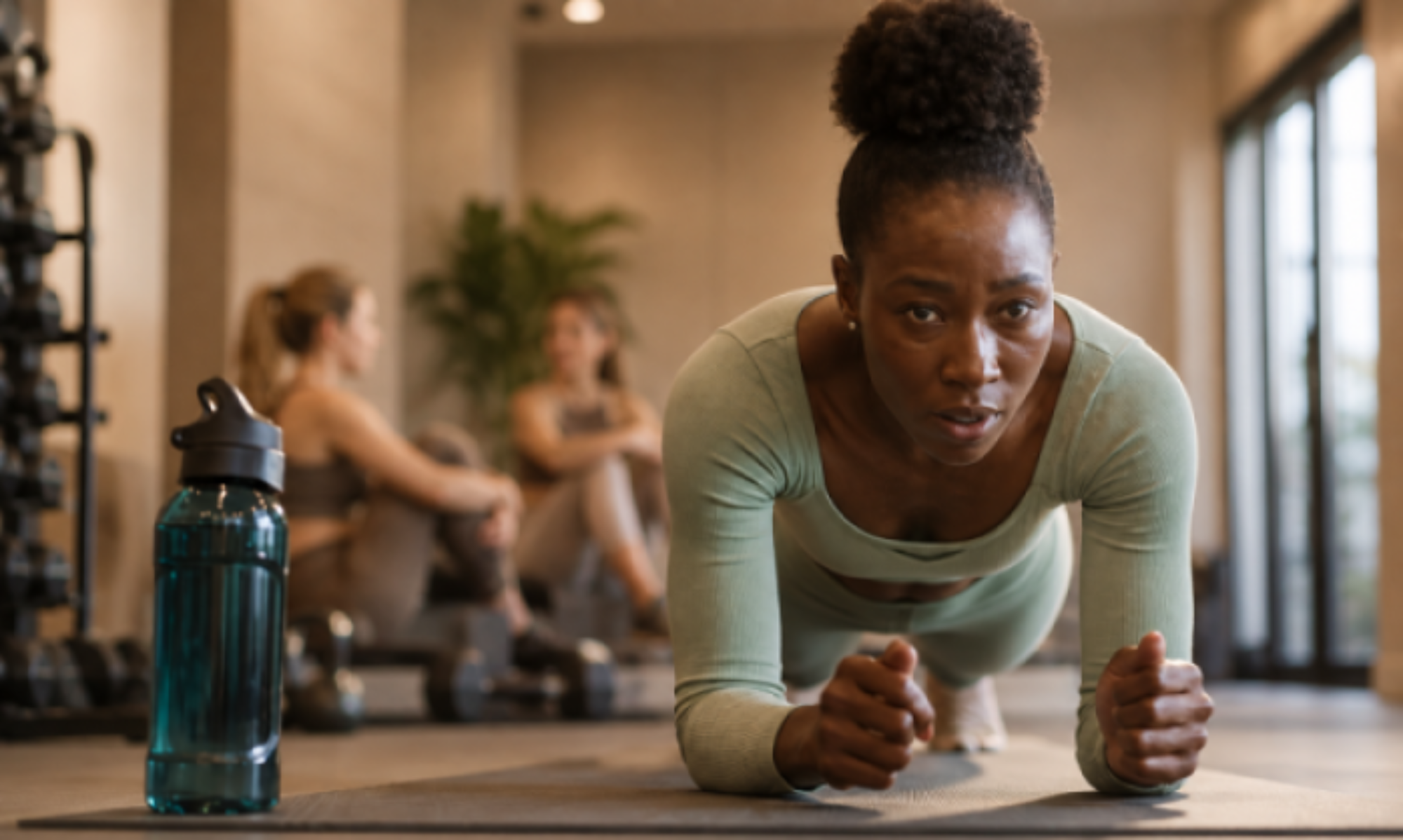
Your 20s are the perfect age for boot camps: adrenaline-pumping workouts that keep things moving (and interesting) with kicks, lunges, planks, push-ups, pull-ups, sit-ups and squats, plus weight training and sprints, usually to loud dance music. Boot camps help young women improve posture and build muscle and strength, which helps keep osteoporosis at bay in later years.
Keep your metabolism working for you

Lift to raise your metabolism
Metabolisms tend to slow as we enter our 30s, so it can be harder to see the benefits of exercise. Weight training is key: more muscle means a higher metabolism, so you burn more calories at rest. It also builds strength. The stronger you are, the more efficient you are and the less effort everything takes. This matters especially for women, as muscle strength starts to drop off with age. It’s harder (though not impossible) to build muscle after menopause, so start beforehand if you can.
Add intervals
You can also kick your metabolism back into gear with high-intensity interval training. HIIT combines short, intense bursts of cardio with strength training, an efficient and effective way to burn fat and increase fitness.
Protect your bones
Bone density peaks at 30, which makes your 30s the perfect time to pick up running, whatever your age has told you. Don’t like running? Adding high-impact exercise to your routine helps prevent brittle bones, fractures and osteoporosis.
Start on your pelvic floor
This is also the decade to start engaging the pelvic floor and deep core. Pelvic floor health isn’t only important during pregnancy. Many women find themselves incontinent in their 50s and 60s because they didn’t start training it early enough.
It is always easier to keep up than to catch up.
If it feels good, do it, and mix it up

In your 40s, no movement is out of bounds. Variety should be a priority. If you’ve been active for years and are no longer seeing results, it’s often because you need to stop doing the same thing. If you’ve always taken Pilates, switch to yoga. If you’ve only done cardio, try lifting weights.
Lift on a regular basis and you’ll gain less belly fat over time and really start to see the benefits of exercise. Weight training also helps protect your DNA against age-related damage. That doesn’t mean you should ease off the cardio, though.
One of the biggest reasons women in their 40s start to gain weight is a loss of lean muscle, which lowers the calories you burn each day. Resistance training keeps challenging your muscles, and it’s easy to do at home with your own bodyweight. The more lean muscle you have, the more calories your body burns at rest.
Easy on the joints, strong for life

Want the benefits of exercise without putting pressure on your joints? You’re not alone.
Pilates
As women in their 50s go through major hormonal changes, Pilates could be the ideal exercise to help them feel better during menopause. A low-impact form of exercise, Pilates is safe on the joints and helps increase bone and mineral density, since many of its exercises involve strength training.
Yoga
Yoga is great at any age, but women over 50 get particular benefits. The breath work is good for the nervous system and heart rate, and balancing postures matter because, as we grow older, losing balance can lead to a fall. These postures build strength and teach us to correct our balance and stay steady. Yoga also keeps us flexible, physically and mentally.
Aqua fitness
Aqua aerobics helps you stay supple, because water resistance builds flexibility and tones muscles. It burns calories and gives you a cardio workout, and being supported by the water takes pressure off your joints.
Dance
Over a five-year period, regular dancing is associated with a 76% reduction in dementia risk among people over 75. Keep it up into your 80s and you may need up to 40% less pain medication.
Don’t ditch the dumbbells
What makes the most difference as you age is muscle strength. Lift weights twice a week and you’ll develop fewer white-matter lesions in the brain and be less likely to fall. It can sound daunting, especially if you’ve never set foot in a gym. Don’t be afraid to ask for help. Stretching and good form are key to getting the benefits of exercise, and our trainers are there to help you.
Whatever your decade, there’s a class for you
Browse our group fitness schedules and find something that feels right for your body.